During my WSET 3 studies, I was first introduced to the wines of the Côtes du Rhône. I loved the high quality, accessible Côtes Du Rhône Villages red wines, which are rich with character but also fruity and yet, simple (not necessarily a bad thing!). However, today I was introduced to the wide variety of wines that the Cotes du Rhône can offer. Rosès that are typically more full bodied, fruity and colorful than those of Provence, white wines in assorted blends, rich in flavor and of course the Côtes du Rhône Villages reds, as well as NAMED villages, 21 total and 17 of which have been promoted to cru status.

Let’s first understand the climate & soils of the Rhône. It has a Mediterranean climate, with mild winters and warm dry summers. The region can be prone to drought as well as wind damage on the flatter plains. For this reason Grenache is bush trained low. Whereas Syrah is more susceptible to wind damage, it is helpful to offer trellising support. Although at times problematic, the winds have a cooling effect. These winds from the north are called the Mistral winds. In terms of soil, the Rhône valley is predominantly granite to the north and limestone to the south, in both cases they have significant presence of clay and sand. The Vineyards are divided between base rock and terraces of varying heights. Some vineyard sites have Galets or stones that cover the vineyard soil surfaces. They bring in heat to the vines to aide in ripening.
Grenache is the dominant black grape variety of most of the wines coming out of the southern Rhône. There are also plantings of Syrah, Mourvèdre, and Cinsault. Additional grape varieties include: Carignan, Counoise, Muscardin, Camarèse, Vaccarèse, Picpoul Noir, Terret Noir, Grenache Gris, and Clairette Rosé for the reds and rosés; Grenache Blanc, Clairette, Marsanne, Roussanne, Bourboulenc, Viognier, Ugni Blanc, and Picpoul Blanc for the whites.
If you were ever curious what certain grapes bring to the blend let’s break it down. In a typical GSM blend from Côtes du Rhône, the Grenache brings red fruits, Syrah structure & a little spice, Mourvèdre color & structure, and Cinsault is light, delicate and fruity.

Fun Tip: Did you know that serving temperature is key to enjoying the most out of your wines? Below learn more about ideal temperature serving conditions, or simply follow the 20/20 rule!
The rules are:
- Red wines should be served at around 15 – 16 °C; white wines should not be served too cold. The ideal temperature is between 10 and 12°C. Even up to 13°C for the more structured, sun-drenched white wines from the south of the region.
- The most effective way to refresh a bottle quickly is to immerse it in a bucket filled with water and ice cubes. To speed up the process even further, add a handful of coarse salt to the ice water, which lowers the temperature of the water by a few extra degrees.
- An even simpler process and one that is easy to remember, is the 20-20 rule:
- take white wines out of the fridge 20 minutes before serving
- place red wines in the refrigerator 20 minutes before serving
- Thanks to INTERPROFESSION DES VINS AOC CÔTES DU RHÔNE & VALLEE DU RHÔNE for this helpful information.

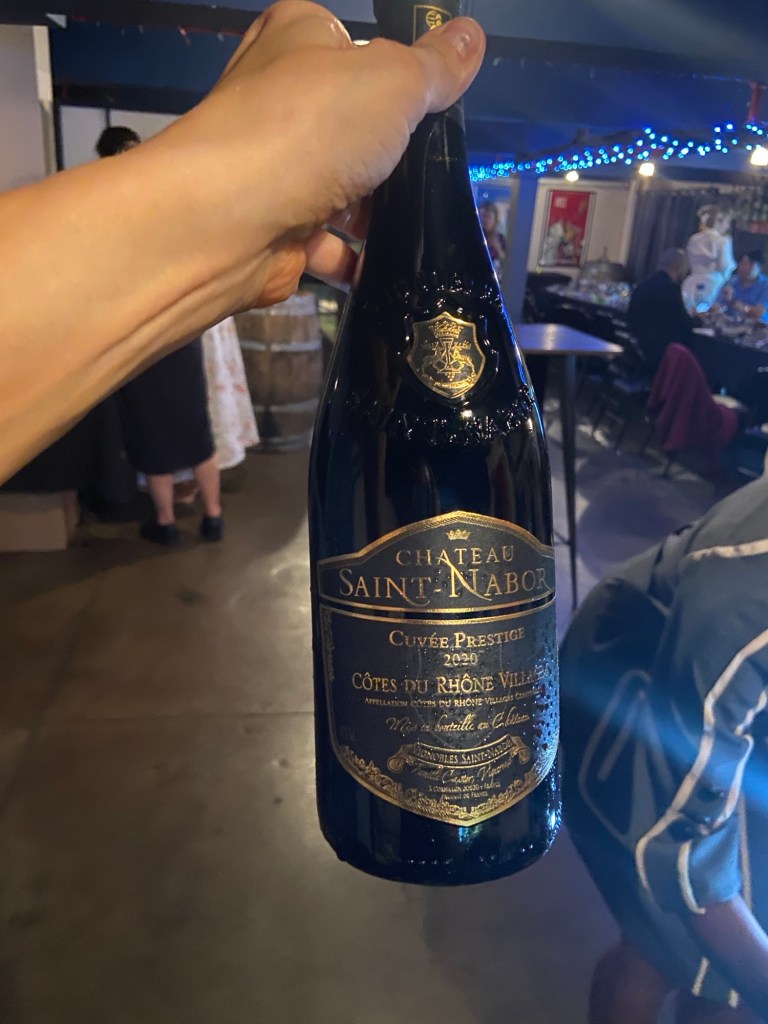
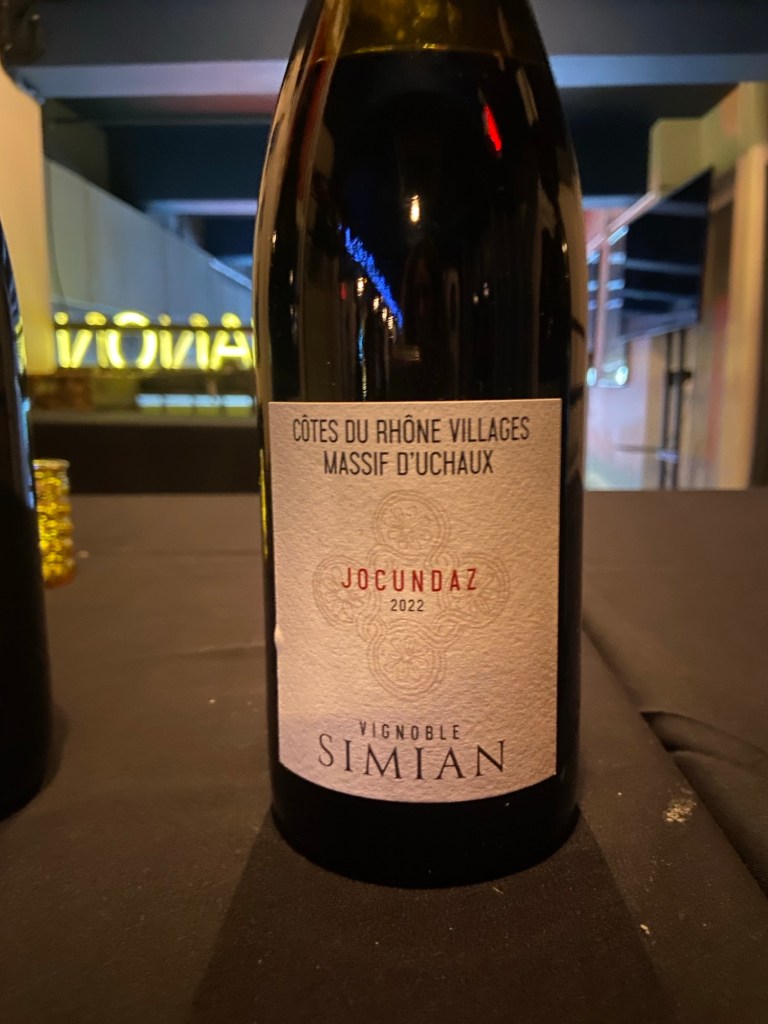
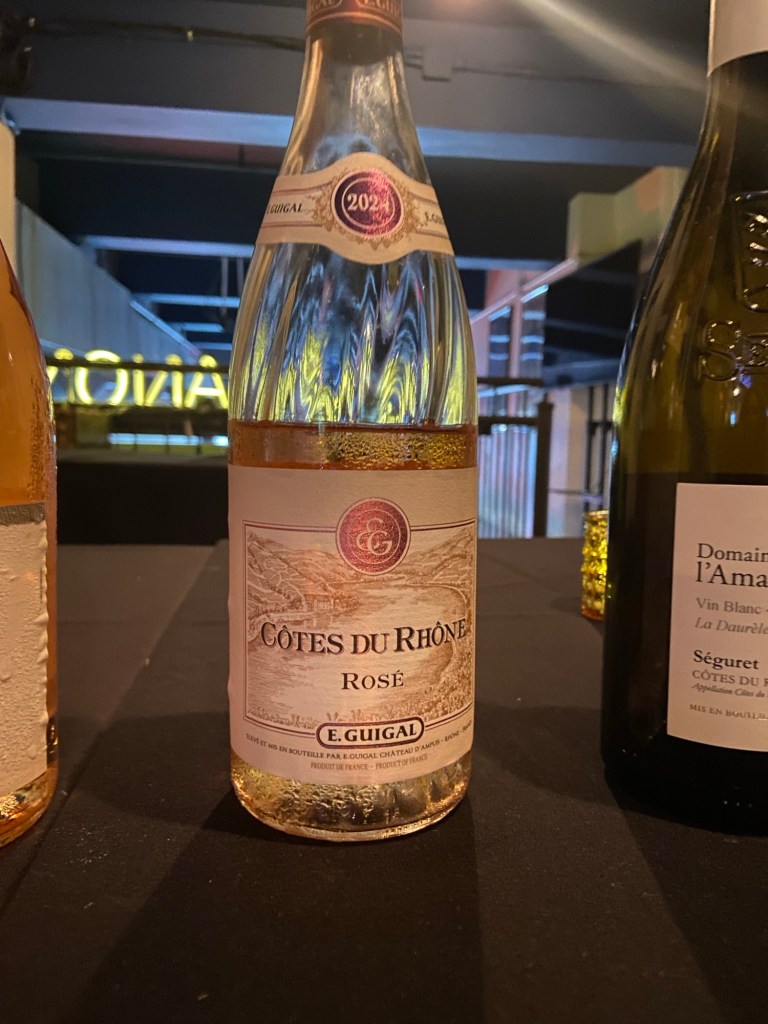
During the Côtes du Rhône Tasting Luncheon we were wined and dined through out the afternoon. This event was hosted by Nicole Muscari, DipWSET at OCabanon in New York City. Below is a menu of the wines and food served, as well as pictures of the bottles. Nicole of course dropped pearls of information on these great wines representing the region. I can honestly say I would recommend all of the wines below as they were great, especially with food. If you enjoy Provence style Rose give a Cotes du Rhone a try! If you like fuller bodied white wines try the food friendly whites from the region and last, each of the reds were a little different so try a few and see what you like. Until next time, cheers!
Aperitif: Crostini of Black Tapenade Jam, Crostini of Fresh Goat Cheese served with a drop of Honey, Mini quenelle tomato cream. Paired with Cellier des Chartreux AOC Côtes du Rhône Chevalier d’Anthelme Rosé 2023 and M. CHAPOUTIER AOC Côtes du Rhône “Belleruche” Rosé 2024
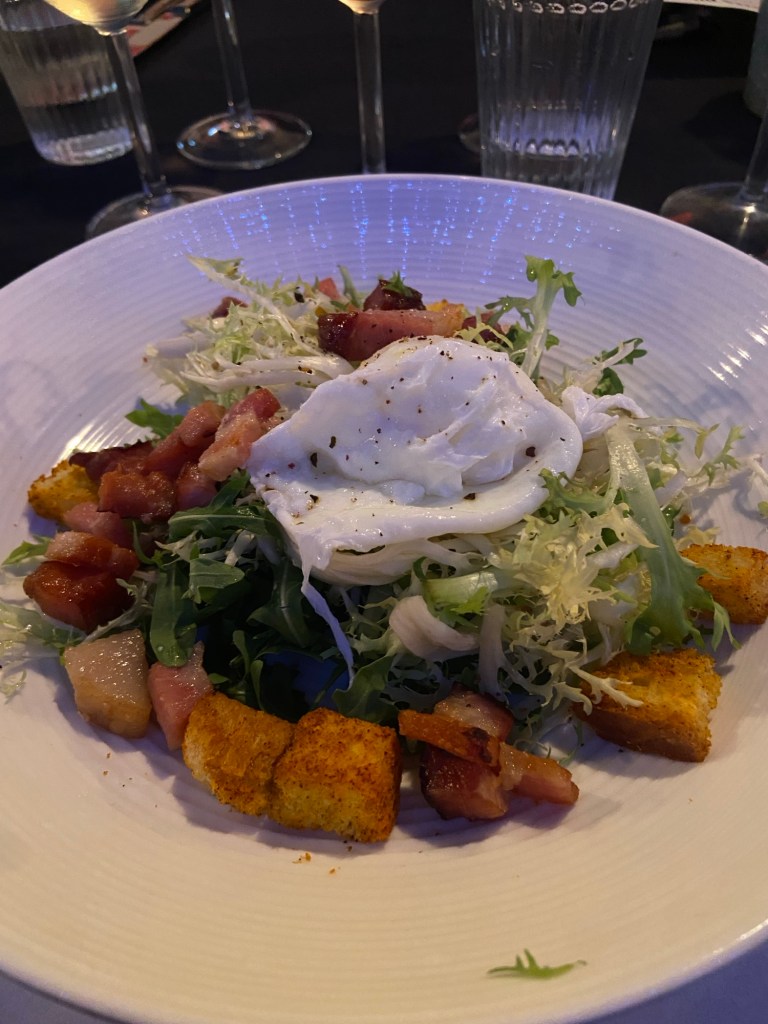
Appetizers: Salad Lyonnaise: Frisee Salad, Croutons, Poached Eggs. Paired with E.GUIGAL AOC Côtes du Rhône Guigal Rosé 2024 and Domaine de l’Amauve (SAS) AOC Côtes du Rhône Villages Séguret La Daurèle White 2023
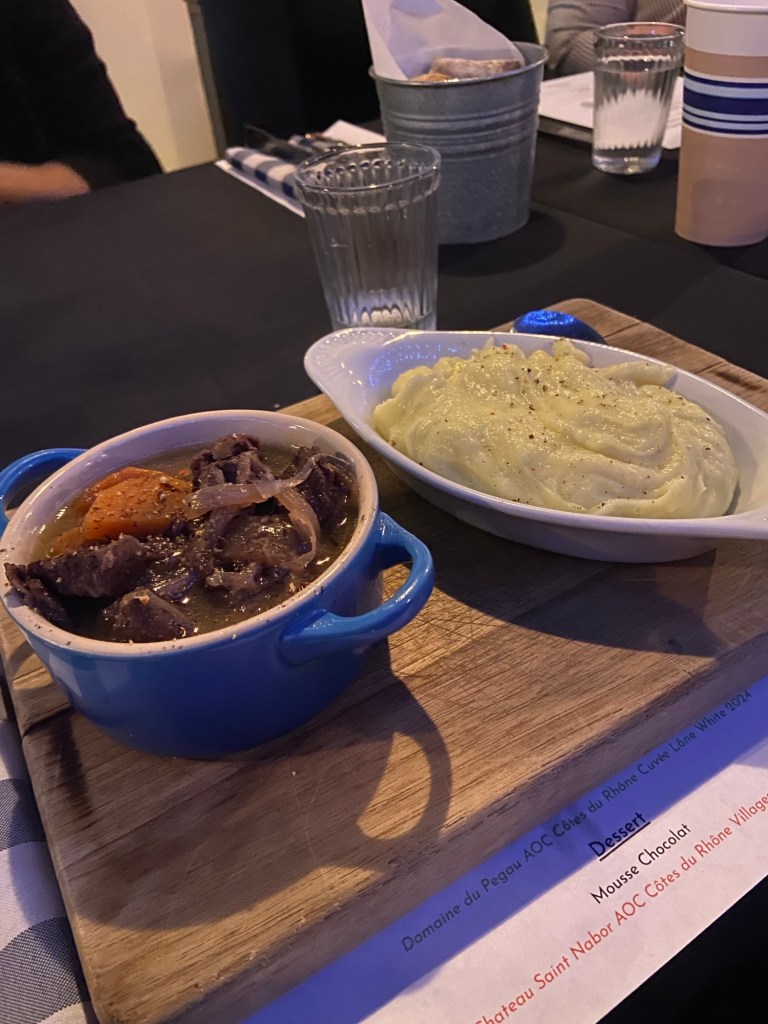
Entrées: Daube Provençale paired with Château Simian AOC Côtes du Rhône Villages Massif d’Uchaux JOCUNDAZ Red 2022 and Domaine Lucien Tramier AOC Côtes du Rhône Villages Plan de Dieu Red 2021
Cheese Course: Saint-Marcellin paired with Maison Gabriel Meffre AOC Côtes du Rhône Terres de Galets White 2024 and Domaine du Pegau AOC Côtes du Rhône Cuvée Lône White 2024
Dessert: Mousse Chocolat paired with Chateau Saint Nabor AOC Côtes du Rhône Villages Red 2020





 Amanda Claire Goodwin | Sommelier Private Wine Tastings & Wine Writer in Monmouth County, New Jersey